Saturday, July 30, 2011

My favourite communication iPad apps

I received an iPad for work pretty early on in the piece, but I must admit I was a slow adaptor to integrating it into my life as a work tool. I always found it a nifty gadget to have around the home, but I couldn't find a niche for it in my day to day work. Until about three months ago when I committed to exploring its potential more as a business tool. And to do that required findng the right apps.

In no particular order, here are the six apps that I believe maximise the benefit an iPad can offer to a communication pro. I wouldn't say I can't do my job without them, but they do help.

Must have apps: The logos of my six favourite communication iPad apps
1. Evernote
Evernote is a simple, free note taking system that I now use to record meeting minutes and actions, conversations, interviews and general thoughts that come to me at 2.13am when I should be fast asleep. Best thing about it is the integration and synchronisation with an Evernote account, allowing you to access the same notes on any computer with internet access simply through their website. Growing more on me every day.
 
2. Flipboard

When Flipboard first launched it was definitely the flavour of the month. Opinion has cooled slightly since but I still find a great way to review my social media streams. The international news content is good as well, however lacks any real Australian content. Still worth having as a more user friendly way to review what others are saying in the SM world.


3. Dropbox and 4. Readdledocs

I've linked these two together as I believe to get the most out of one, you shoul also have the other. Dropbox acts as a cloud for you to store documents on and view from anywhere with internet access. It's free and gives you 1gb of storage straight up. The only downside is that to view documents offline you have to synch each document individually. Enter Readdledocs, a paid app ($5.99), but allows you to access your Dropbox account and synch your whole account in one go. Much better!

5. Tweetdeck

I find Tweetdeck the best social media coordinating tool. Sure it has some flaws, but much better and easier to use than the Twitter iPad app.

6. Kindle for iPad

Okay, so not purely a communication pro tool, but definitely worth having on the iPad. My reading has increased dramatically since installing this app. It means those minutes waiting for a meeting to start or client to arrive can be put to use reading a few more pages. My biggest frustration is not knowing how many 'real' pages I've read, but overall I'm a convert to the e-book.

I'm sure this list is far from definitive, but it is what I use so far and have found helpful. What are your suggestions?

JH 
 

Sunday, July 24, 2011

Tour de France: a communication analogy?

Australia is in celebration today with the overnight accomplishment of Cadel Evans becoming the first Aussie to win the gruelling Tour de France cycling race.

I've been a follower of Le Tour for almost a decade now and admire it for its physical feats as well as the strategic and tactical requirements to do well in the race. To a casual observer, as I was when I started, it can be confusing as to why cyclists don't go hard all the time, that they race in big packs, work for certain members of a team at the individuals expense and why they don't race for a win on the last day due to a gentleman's agreement.

It is because of this need for strategy and tactics that I think the cycling in the Tour de France has extraordinary similarities to the role of corporate communications. Everyone applauds and recognises the achievement when the success is evident, such as Australia is with Cadel winning this year, but very few people would understand the hard work behind the scenes, the training and the tactical and strategic decisions made to get that point.

Like the tour, there are times where different approaches are needed, you might choose to break away from the pack, attack a stage or require a speedy sprint (a media launch or proactive campaign). Other times you might simply wish to shadow your competitor, avoid any crashes and simply minimise damage on the clock (issues management, working to keeping an issue out of the media all together or building relatonships through internal communications). The work of a team all aligned for one aim or cause means success can be shared by all - the same is required by the best communication teams.

The tour is raced over 21 stages and more than 86 hours of saddle time, yet most of Australia today will only recognise the efforts put in by Cadel in the last stage or two. And that is fine, you don't need to be a purist to enjoy the achievement. But those with an understanding will recognise that sometimes to achieve you need to vary your tactics for the conditions, go flat out when needed and perform to your strengths.

I can only hope that as my career in communications continues I can one day say I achieved my yellow jersey...

JH

Monday, July 11, 2011

Carbon price from a communication perspective

Interesting, so much focus on the communication....is the prob people aren't listening, cos PM has definitely been out there.... (@latikambourke)

I honestly don't think that Julia can explain this more clearly. People just aren't listening. They don't want to (@peterjhinton)

Some say it's too difficult to understand (inc word "carbon"). Others say JG talks down to them & she thinks they're dumb (@bonitamersiades)

After day two of the carbon price campaign, a common theme emerging in discussion, on Q and A and certainly among the twittersphere (see above) is that the message is just not coming across from the government and been accepted by the community.

The sample above shows what might be one of the problems - the fact that the government is out there selling the message, wearing out the ‘soles of shoes’ and doing interview after interview, but the message is not resonating with the public. The danger of this is that the attitude is taken that the PM and government are communicating, but it is the public’s fault for not listening.

Now at this stage, my research only goes as far as the people of Twitter (although @latikambourke is a good political insider), but if this view is ever held by Government then they might as well give up. Because if you are saying something and people aren’t listening, then you’re not communicating – just talking! It’s your fault not theirs.

As the instigator of the communication it is your responsibility to ensure that they engage in the conversation and provide feedback that indicates an understanding. If that understanding is not evident, then you need to either change your message or change the way that you are saying it so that you can give them another shot.

The basic communication model to the right demonstrates the principles needed for successful communication. The Government could do much worse than remember this as it tries to sell the message.

Of equal importance, and missing from the diagram, is the impact of interference in the reception of the message. This will stem from pre-conceived thoughts and ideas, influences and in this case, the Opposition.

The sales pitch for the carbon price is going to be five weeks of message massage and opportunity for real engagement. It will not be an easy sell for the Government because the Opposition has the much easier task of tapping into the basic of communication principles, Maslow’s Hierarchy of Needs, and using self-interest and fear/safety to sell their message and undermine the Government. In order for the Government to have any chance, they need to be rock solid on message, talk in everyday language and be able to answer each and every question with confidence and clarity. To have any doubt or uncertainty on questions will simply play into the Opposition’s hands.

We are only on day two of plenty, but one thing is clear about this carbon price – communication will play a big part in deciding the acceptance of this issue, and potentially of the Government in two years.

JH

Sunday, July 3, 2011

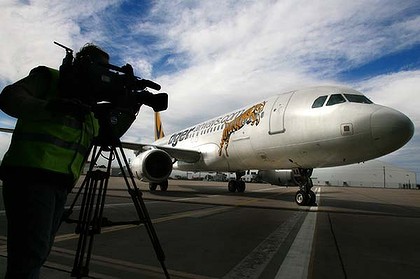
Crouching Tiger, hidden spokesperson?


Tiger's media response is questionable at best (Photo:Fairfax)
Travel plans for thousands of Australian holiday makers were thrown into chaos on the first day of school holidays over the weekend as Tiger Airways was grounded by the Civil Aviation Safety Authority.

The grounding, on the basis of repeated safety breaches, is pretty much the biggest crisis an airline could face outside of an actual crash. Yet the crisis management response from Tiger seems to be at best in the same mould as their discount flight model – basic. 

In my opinion the crisis management has been more like their safety procedures – inept and dangerous.

Three days on since the announcement by CASA, Tiger Airways have not hosted one single media conference. Their CEO, Tony Davis, has conducted a minimal number of interview by telephone and he has remained based overseas. Local managing director, Crawford Rix, based in Melbourne, has also remained silent and ‘could not be contacted’ by media seeking comment.

In my role as Public Affairs Manager last week I had a number of issues breaking at the same time. Now while certainly not of the Tiger scope, they involved people’s lives, health and in one case, death. I took the approach that I have always maintained during a pressure time: put your hand up when done wrong and state the facts and clear the record when allegations are false.

Credibility and reputations are a two way street – you can’t only be available to talk when the going is good and pretend the media don’t exist if they say nasty things about you. I’ve always found that through honesty, it means when you tell the media something is inaccurate or downright wrong, they are quicker to respond to correct it, or at least let you get your side out there.

In my opinion, Tiger Airways may need to relaunch itself as Ostrich Airways – because the longer they keep this head in the sand approach to crisis communications the higher the chance they will remain flightless.

Thoughts? Are Tiger better to stay quiet on the situation for fear that any comment will make the matter worse or should they come out and explain what actions they are taken?

JH

Monday, June 27, 2011

Too big to fail or to ignorant to collaborate?

'To criticize the firm's direction was to be branded a traitor and tossed out the door.'
 
I'm currently reading Andrew Sorkin's 'Too Big to Fail: The inside story of how Wall Street and Washington fought to save the financial syste, - and themselves'. It's a fast paced, insiders view of how Lehman Bros collapsed and the GFC escalated.

The sentence at the top of this post is from early in the book and provides a crucial diagnosis of  how the culture in firms such as Lehman's were a direct contributing factor, if not the main cause of the financial crisis. It reminds me of a saying regarding management teams - if I have eight people in a room all saying the same thing, I have seven people too many – essentially showing how Lehman’s chose the one voice, dedication to the corporate line and aversion to conflict over any different points of views.

In the communication world I think this mindset has the potential to be challenged like never before. The focus on social media and collaboration tools is done in the hope of better discussion, to challenge the status quo and promote idea sharing. The benefits are clear for every one to see - but in order to do that there needs to be an acceptance of risk, criticism, discussion and debate.

Are collaboration and social media concepts that in many cases will never truly be adopted, or used to their true capacity in some firms because of the belief that to have a different opinion is to be disloyal or be branded a trouble maker?

The lesson learnt from Lehman’s was that these differing and conflicting thoughts and opinions were shared among the employees with email trails demonstrating the true, yet publicly unsaid, internal criticism of the organisation.  The failure of the management to embrace the opportunity, warts and all, means that social media and collaboration tools could not play any part in averting the final outcome for Lehman.

It will be interesting to see what lessons other businesses, especially investment firms, learn and whether social media/collaboration tools can be embraced to discuss a healthy dose of conflict.

JH

Sunday, June 19, 2011

Is 'it's not fair' a suitable argument?


I’ve noticed an interesting phenomenon creeping into the media and issues management for specific bodies. I’ve now seen two very recent examples where a proposed change is fought against on the basis that it will harm an industry and employment.

The Australian Hotels Association is claiming that the pub and club industry will be ‘wiped out’ because of proposed pokies reform by Tasmanian MP Andrew Wilkie. More recently, the ban on live exports of cattle to Indonesia is being protested against because it will ‘destroy farmers’.

Let me make it clear I have great sympathy with farmers and love going to my local RSL, but I can’t help but see one huge flaw in their objection – is keeping a business running a good enough reason to continue injustice? If this was the case would there have been the burning desire to get rid of slavery or fight apartheid? The decision to stop slavery certainly had a real impact on the way Americans operated their businesses and on their standard of living. But it was the right thing to do.

I don’t doubt that the live export ban could be better managed and compensation is deserved, and potentially the same for pokies reform. But if we are all agreement that the practice itself is wrong, then the fact that some people will suffer in the short term to improve long term standards is not really a suitable defense

JH.

Thursday, June 16, 2011

Parliamentary ejections: are they still acceptable behaviour?

I've been watching Victorian and Federal parliament question time sittings with interest this week (get a life, I hear ya) and am amazed that the standard of behaviour continues to be seen as acceptable by our apparent leaders.

In Canberra on Wednesday we had six pollies ejected from question time, including one who was out for 24 hours. This led the Speaker, Harry Jenkins, to allude that 'Those outside expect better from all of us, from all of us. And I'm conscious that that includes myself.'. I say he is on the money - we do and should expect better. I stated in a tweet at the time that if six players were sin binned during the State of Origin rugby league match there would be outcry. Yet some how it is seen as part of the theatrics, the drama of politics.

Again today, four politicians were ejected from the Victorian parliament. But again this seems to be seen as normal behaviour. My far from scientific evidence reveals two tweets throughout the day about the Spring St ejections. By comparison the suspension of Geelong football player was mentioned in 105 tweets. Why is it that we as a community seem to be outraged when  footballer is suspended but don't bat an eyelid when the people paid to represent us act out of line and essentially behave in a manner that would not be tolerated in any other workplace or schoolyard?

Maybe I'm the one out of touch and this sort of drama is needed to ensure that there is at least something colourful to fill the required token quota of political coverage on the nightly news, but I will say with certainty that the Mr Jenkins was definitely speaking for me yesterday - I do expect better.

JH